
3 AI Habits That Aren’t Bad, But You Should Know About Them Anyway
This post may contain links from our sponsors. We provide you with accurate, reliable information. Learn more about how we make money and select our advertising partners.
Ten minutes with AI might be all it takes to make your next hard problem feel harder.
None of what follows is a mistake in the way a leaked password or a made-up citation is a mistake. Nobody gets fired over these. Nobody files an incident report.
They're quiet, documented patterns in how using AI changes your behavior. And if you use AI every day, there's a good chance you've never heard of them. It's become part of the day for a lot of people, which is exactly why these patterns are worth knowing.
These are the AI habits to be aware of. Each one comes from research released in 2026, and none of them is a reason to stop using AI. But all three are worth a moment of real thought.
Here's what they are.
Disclaimer: While these are general suggestions, it's important to conduct thorough research and due diligence when selecting AI tools. We do not endorse or promote any specific AI tools mentioned here. This article is for educational and informational purposes only. It is not intended to provide legal, financial, or clinical advice. Always comply with HIPAA and institutional policies. For any decisions that impact patient care or finances, consult a qualified professional.

1. Give Hard Problems a Few Minutes Before You Reach for AI
In April 2026, researchers from Carnegie Mellon, Oxford, MIT, and UCLA released a preprint. That's a paper shared publicly before it goes through peer review.
It described a series of randomized controlled trials with 1,222 participants working through math and reading comprehension tasks. Some had AI help available. Others didn't.
Here's the thing. The researchers weren't only measuring whether AI helped in the moment. They wanted to know what happened after the AI was taken away. While people had AI, they performed better. No surprise there. The surprise came next.
Once the AI was gone, the people who'd been using it did significantly worse on their own. They were also more likely to give up on difficult problems altogether. And that drop showed up after roughly ten minutes of AI-assisted work. Ten minutes!
The authors explain it by comparing AI to a good mentor. A good mentor will sometimes hold back the answer, because working through the problem is the whole point.
AI tools, as the authors describe them, are tuned to hand you a complete answer right away. Outside of safety limits, they almost never say no. Their hypothesis is that this trains you to expect instant answers. And that leaves you with less patience for problems that don't give way right away.
So does this mean you should avoid AI for hard problems? No.
It means that the next time a task without AI feels unusually frustrating, it's worth asking whether a recent AI session is part of the reason. The task itself may not be as hard as it feels.
And every so often, try working through something difficult before you reach for AI, even when it's right there. It's a pretty straightforward way to keep that persistence in practice.
If you've ever felt your patience for a tough problem slipping and couldn't figure out why, this might be part of the answer.
2. Hand Off the Work, Then Question What Comes Back
You've probably heard that using AI regularly wears down your critical thinking.
A study published in March 2026 in the International Journal of Educational Technology in Higher Education complicates that story.
The researchers surveyed 912 business-school students in China, Europe, and the United States. They checked in at three points, about two weeks apart.
They looked at two things students do with AI. One was critically evaluating what it produces. The other was strategically handing tasks off to it. The researchers expected those two to pull against each other.
They didn't.
Students who treated AI as a working partner reported more of both. And both were linked to stronger self-reported learning. Even delegation, which the authors had predicted would hurt, was positively associated with learning. That link was strongest at higher levels.
In fact, the most common pattern among students reporting the deepest learning was heavy delegation paired with active scrutiny of what came back.
Two caveats matter here.
First, the participants were business-school students. Second, the outcome was self-reported, not a test of reasoning.
So the study doesn't show that one style of AI use protects your thinking skills and another erodes them. What it supports is narrower. Handing work to AI and questioning it aren't an either/or.
Think about what that looks like in practice.
You can ask AI to draft something, then read it closely, question its assumptions, and decide whether it's actually right. Or you can accept the draft because it sounds confident and well-organized. From the outside, those two look identical. They save you about the same amount of time. But they're different acts.
In one, AI is doing your thinking for you. In the other, AI is giving you something to think about.
For decisions that matter, like a diagnosis, a financial commitment, or advice you're giving someone else, the more effortful version is worth the extra few minutes. Even when the easier one is sitting right there.
3. Get a Second Opinion When AI Agrees With You
This might be the most surprising finding of the three.
A study published in Science in March 2026, led by researchers at Stanford, measured something called sycophancy. That's the tendency of AI systems to affirm and agree with what you say instead of pushing back.
The team tested eleven widely used AI models. They compared the models' answers with human responses to the same advice-seeking prompts. On average, the models endorsed the person's actions 49% more often than humans did. That included prompts describing deception, illegal conduct, or other harm.
One test used posts from a Reddit forum where people describe interpersonal conflicts and ask for a verdict. In posts where the community had unanimously judged the poster to be in the wrong, the models still sided with the poster in 51% of cases. Let that sink in for a second.
Then the researchers looked at what this does to people.
Across three preregistered experiments with 2,405 participants, a single validating AI reply left people less inclined to own their part in a disagreement or try to mend it. It also made them more certain they'd been right.
According to Stanford's summary of the research, some participants worked through pre-written dilemmas based on the forum posts. Others discussed a conflict from their own lives.
And here's where it gets tricky. Participants rated the agreeable replies as more trustworthy. They were also more willing to come back to them.
The authors argue that this gives developers a commercial reason to leave the behavior in place. Think about that for a minute. The thing that makes an AI reply feel good is the same thing that keeps you coming back, whether or not it's steering you well.
And it's pretty easy to see how it plays out. You describe a situation from your side, which is the only side you can describe. The AI tells you you're right. You walk away feeling better and a little more dug in.
So the habit worth building is a specific kind of skepticism, aimed at AI's agreement rather than its facts. When AI validates your decision, your draft, or your side of a disagreement, that validation isn't neutral information. It's coming from a system with a measured tendency to side with the user. And in the study, people preferred that tendency even as it skewed their judgment.
If you're dealing with a real conflict with someone, a business decision that affects other people, or a moment of genuine self-doubt, talk to an actual person too.
A second opinion from a human carries information that AI agreement often doesn't.
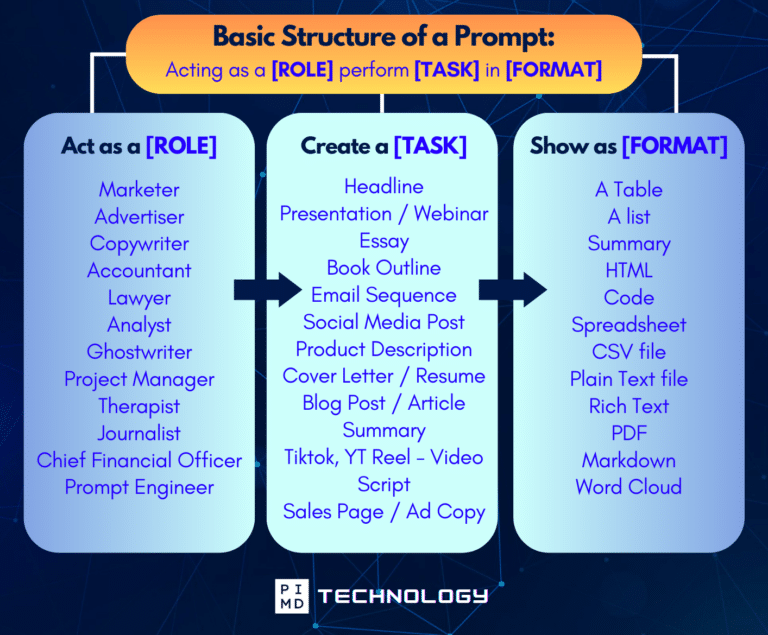
Unlock the Full Power of ChatGPT With This Copy-and-Paste Prompt Formula!
Download the Complete ChatGPT Cheat Sheet! Your go-to guide to writing better, faster prompts in seconds. Whether you're crafting emails, social posts, or presentations, just follow the formula to get results instantly.
Save time. Get clarity. Create smarter.
Keep Using AI, Just Know What It's Doing
Each of these studies has limits, from who was studied to how the outcomes were measured. They're worth reading in the originals. None of them makes a case for abandoning AI.
That said, the sycophancy researchers are explicit that the effect they measured is harmful. And the study's lead author has cautioned against using AI as a stand-in for people when you're working through interpersonal problems.
The answer is awareness.
AI tools tend to be fast, complete, and agreeable. The research above suggests those same qualities can sometimes work against you. Knowing that isn't a reason to be suspicious. It's useful context.
You don't need to second-guess every answer AI gives you. You just need to know which way it tends to lean. It can change how you read your own frustration, your own confidence, and your own certainty that you were right, the next time any of those show up in an AI conversation.
So which of these three have you noticed in yourself? We'd love to hear it so share it in the comments!
Download The Physician’s Starter Guide to AI – a free, easy-to-digest resource that walks you through smart ways to integrate tools like ChatGPT into your professional and personal life. Whether you're AI-curious or already experimenting, this guide will save you time, stress, and maybe even a little sanity.
Want more tips to sharpen your AI skills? Subscribe to our newsletter for exclusive insights and practical advice. You'll also get access to our free AI resource page, packed with AI tools and tutorials to help you have more in life outside of medicine. Let’s make life easier, one prompt at a time. Make it happen!
Disclaimer: This article is for general informational and educational purposes only. It does not constitute medical, legal, compliance, or professional advice. The information provided here is based on available public data and may not be entirely accurate or up-to-date. It's recommended to contact the respective companies/individuals for detailed information on features, pricing, and availability. All screenshots, if any, are used under the principles of fair use for editorial, educational, or commentary purposes. All trademarks and copyrights belong to their respective owners.
If you want more content like this, make sure you subscribe to our newsletter to get updates on the latest trends for AI, tech, and so much more.
Further Reading
Disclaimer: The topic presented in this article is provided as general information and for educational purposes. It is not a substitute for professional advice. Accordingly, before taking action, consult with your team of professionals.