
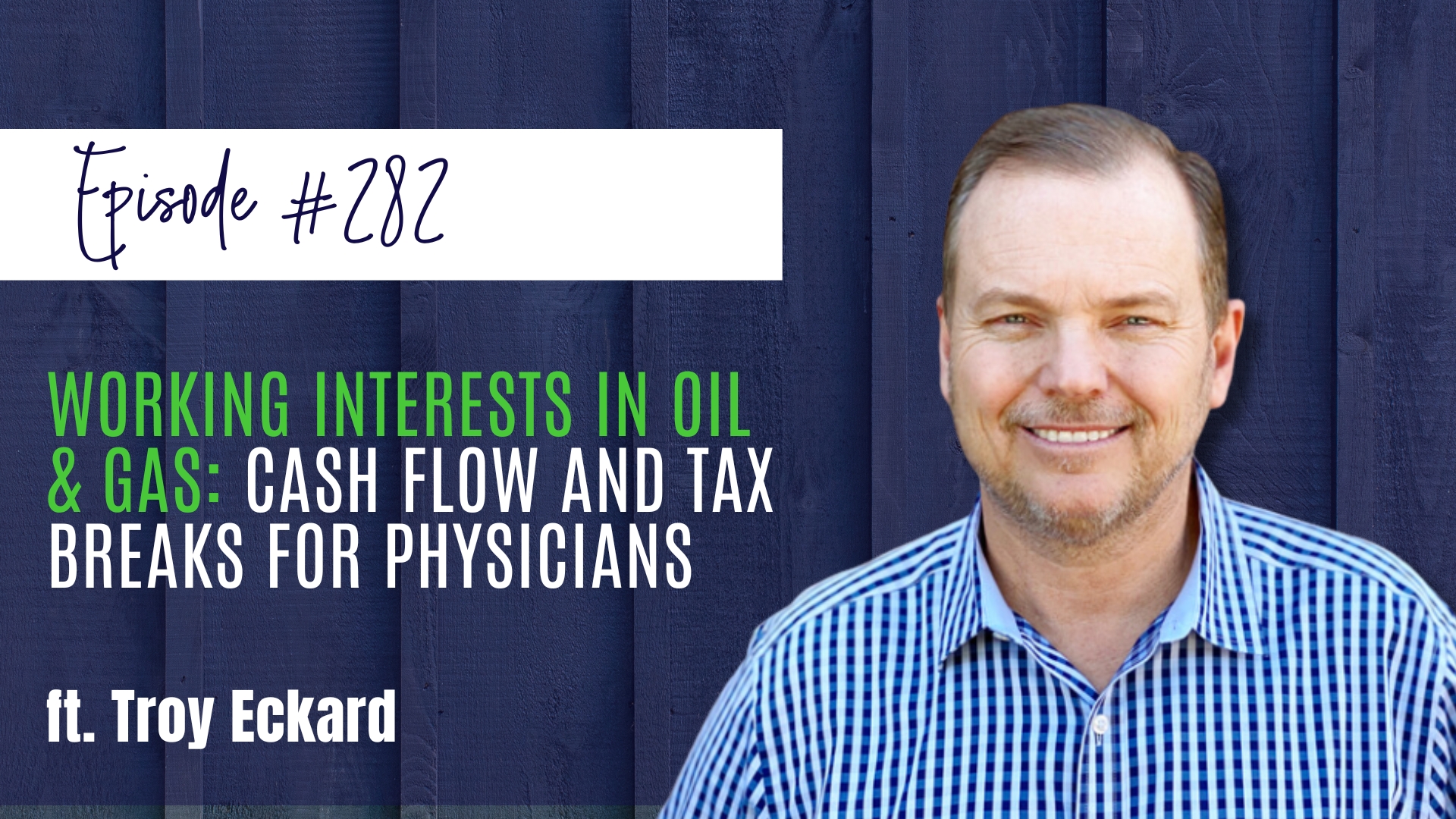
#282 Working Interests in Oil & Gas: Cash Flow and Tax Breaks for Physicians ft. Troy Eckard of Eckard Enterprises



Episode Highlights
Now, let’s look at what we discussed in this episode:
-
Introduction to Working Interest Investment
-
What is Working Interest?
-
How Technology Changed Oil Drilling
-
What to Expect from Oil Investments
-
Why More People Don’t Know About Oil Investments
Here’s a breakdown of how this episode unfolds.
Episode Breakdown
Introduction to Working Interest Investment
Peter Kim introduces the episode’s guest, Troy Eckard, CEO of Eckard Enterprises, and highlights the focus of the conversation: working interest in oil and gas investments. He explains that there has been increasing interest in these types of investments, especially because of the tax benefits that they offer, particularly for busy professionals like physicians. Peter emphasizes the value of understanding this asset class to build financial freedom and mentions the tax advantages associated with working interests in oil and gas, which many listeners may not yet know about.
Troy Eckard shares a brief introduction about his experience in the oil and gas industry, stating that he has been working in the field for over four decades since 1985. He details his company’s mission of bridging the gap between the oil and gas industry and private capital, enabling individuals like doctors, lawyers, and small-business owners to directly invest in oil wells and other energy resources. He stresses that their approach allows high-net-worth investors to participate in this asset class, providing direct ownership and potential wealth-building opportunities.
Understanding Working Interest
Troy explains what working interest is in the context of oil and gas investment. He provides a comparison to traditional real estate investment, making it easier for listeners to understand. Troy likens mineral rights investments to owning land that can be developed for higher value. Working interest, he explains, is when investors contribute capital to actually develop and drill wells, making it an active form of investment compared to the passive nature of owning mineral rights or royalties.
He then connects this to the government’s role in incentivizing energy production, mentioning how tax benefits have been designed to encourage private investors to participate in oil and gas exploration. This incentive is particularly crucial as it allows investors to deduct 100% of their investment, providing significant tax relief for high-income individuals. Troy emphasizes that while there’s a high reward potential, finding trustworthy drilling operators is crucial, as past oil ventures used to have lower success rates. He assures listeners that technology advancements have significantly improved the success rate of oil wells today.
Technological Advances in Oil Drilling
Troy shares insights into how technology has changed the landscape of oil drilling, particularly focusing on horizontal drilling techniques. He explains that early oil drilling was akin to searching for a needle in a haystack, with a high likelihood of dry wells. However, the introduction of horizontal drilling has revolutionized the process, allowing for much greater oil recovery from the same land.
Using Las Vegas as a visual analogy, Troy describes how early oil exploration was challenging due to the vertical drilling methods used. With horizontal drilling, the industry has significantly improved its ability to extract oil from once-inaccessible formations. He illustrates that a single horizontal well today can have the recovery potential of hundreds of traditional vertical wells, making it a much more reliable investment. Additionally, fracking technology, which creates pathways for oil to flow, has further boosted recovery rates. As a result, Troy claims the industry now has access to an unprecedented amount of oil, which is why the U.S. is the number one oil producer globally.
Key Investment Considerations and Returns
Troy discusses the potential returns and timeline that investors can expect from working interest in oil and gas investments. He shares a detailed example involving a $100,000 investment in a $50 million drilling program, breaking down how the capital is used and when investors can expect to start seeing returns. Troy explains that while the drilling itself takes time, the early returns from these types of wells can be substantial, with first-year distributions typically running between 45% to 60%.
He further elaborates on why Eckard Enterprises’ track record is so impressive, noting that their team’s strong operational model and strategic approach result in significantly higher success rates. He mentions that some other companies might charge high fees or mark up well costs, which can eat into potential returns for investors. On the other hand, Eckard focuses on giving investors a fair deal by ensuring transparency and efficiency in the investment process. He urges listeners to consider the credibility and experience of the drilling operators when making such investments, stressing that due diligence is key to making a sound decision.
Education and Access to Oil and Gas Investments
In closing, Troy addresses why many high-net-worth individuals, especially physicians, are unaware or hesitant to invest in oil and gas working interest. He reflects on the lack of straightforward information available to the average investor and how the oil and gas industry has historically been opaque. According to Troy, part of the reason for this is that the oil industry did not want investors to fully understand the intricacies of the sector, allowing them to sell high-risk investments at inflated prices.
Troy offers his company as a solution, where potential investors can get educated about oil and gas investments. He stresses the importance of making informed decisions, highlighting that his company provides extensive educational resources to help demystify the process. By giving investors access to detailed information, Troy believes that more individuals will feel comfortable entering this asset class. He concludes by inviting listeners to explore the opportunities with Eckard Enterprises, emphasizing that those who make over $300,000 annually should seriously consider adding oil and gas investments to their portfolios, as it offers exceptional tax deferral benefits and strong potential returns.
YOU KNOW ALL TOO WELL THAT ENTREPRENEURSHIP CAN BE A LONELY BUSINESS.
If you are looking for a private, invitation-only Mastermind designed for physicians and high-performing professionals who will settle for no less than fulfilling their visions of success while helping others do the same — Momentum MD is for you!
Filling our next cohort now, limited spots are available! APPLY now!