
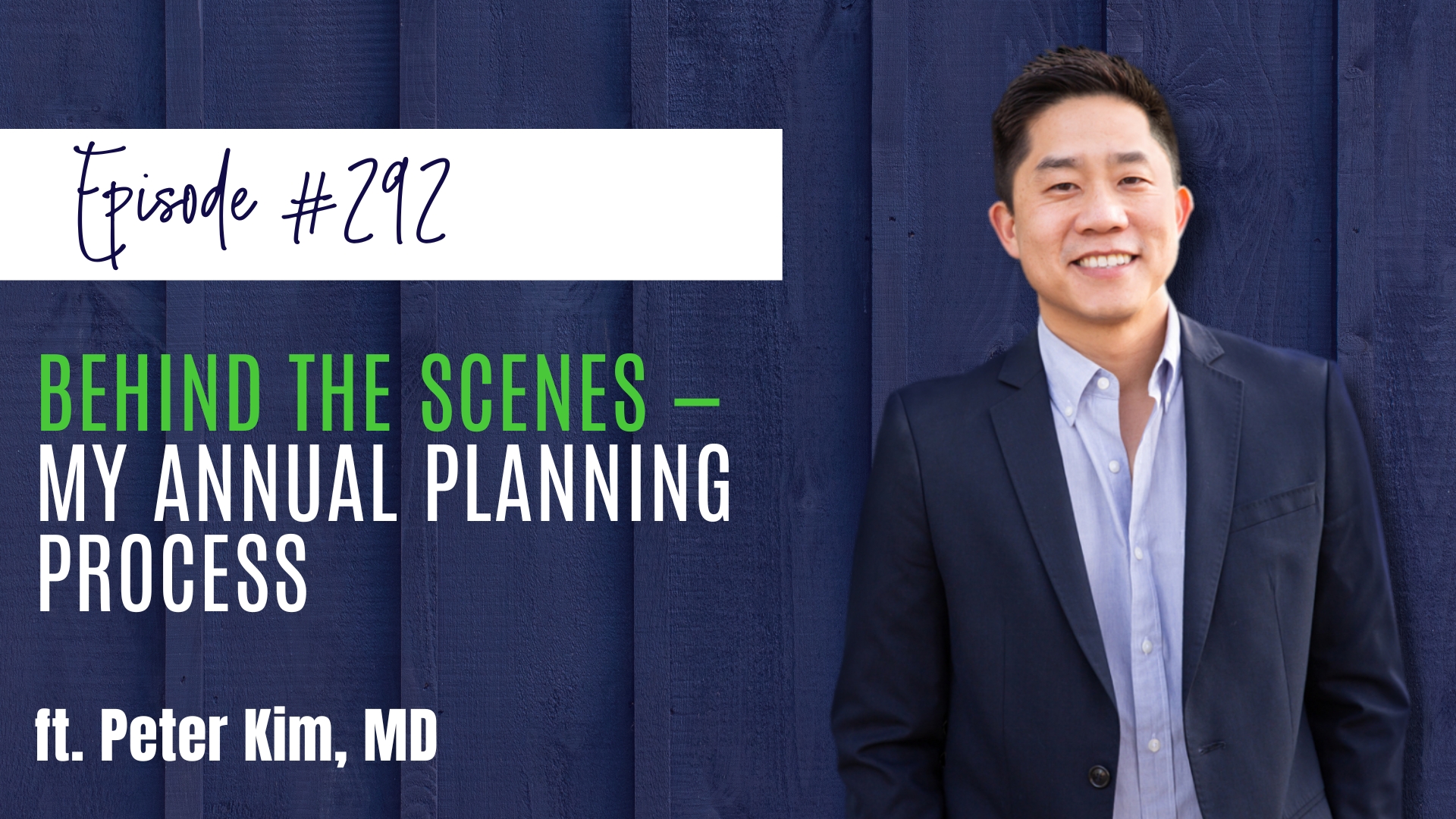
#292 Behind the Scenes — My Annual Planning Process ft. Peter Kim, MD



Episode Highlights
Now, let’s look at what we discussed in this episode:
-
Why I Do an Annual Planning Session
-
Looking Back Before Looking Forward
-
Setting Intentions and Specific Goals
-
Mapping Out the Freedom Calendar
-
Staying Accountable and Adjusting as the Year Unfolds
Here’s a breakdown of how this episode unfolds.
Episode Breakdown
Why I Do an Annual Planning Session
Peter begins by explaining why he takes a few hours each year to pause, sit somewhere quiet, and reflect. He clarifies that this is not a business plan or a corporate exercise. Instead, he treats it like a yearly life checkup that helps him stay intentional rather than living on autopilot.
He shares that he once believed he was too busy to slow down. Eventually, he realized that the busy feeling came from not planning at all. When he started creating space to think ahead, life felt more manageable and less chaotic.
Peter also describes the frustration that sparked this habit. He often ended days feeling behind, overwhelmed, and controlled by other people’s schedules. The turning point was recognizing that if he did not design his life, someone else would. This became the foundation of the planning routine he now follows every year.
Looking Back Before Looking Forward
Before making plans for the next year, Peter reviews the one that just passed. He asks himself simple guiding questions. These include what went well, what did not, what gave him energy, and what drained him. He organizes these insights into categories such as work, family, health, finances, and fun.
He takes time to review his calendar because it helps him see how much actually happened. Daily life moves quickly and accomplishments are easy to overlook. Looking back reminds him of the progress he made and highlights areas that need improvement.
Reflection is essential because many people skip straight to setting new goals without understanding the patterns that shaped their year. By understanding the past clearly, Peter ensures that the next year is designed intentionally rather than automatically repeating old habits.
Setting Intentions and Specific Goals
Once the reflection phase is complete, Peter turns toward the future. He begins by asking what he wants the next year to feel like and why it matters. For him, the answer right now is freedom and the ability to be fully present with his children. Understanding this emotional reason helps direct the decisions that follow.
He also brings his wife into the process early. He begins planning on his own to collect his initial thoughts, then they sit together to talk about travel, family goals, work schedules, and what each of them wants. This teamwork prevents surprises later and creates alignment at home.
When he sets goals, he avoids vague statements like “travel more” or “invest more.” Instead, he chooses goals that are measurable. These include how many trips he wants to take, how many deals to invest in, or how much time he wants to reclaim. Adding numbers and timelines makes the process real and gives him a natural roadmap.
Mapping Out the Freedom Calendar
This step turns intentions into a practical plan. Peter opens his Google Calendar and begins scheduling the year. He starts with personal and family commitments such as trips, school events, time with his wife, and even time to rest. Work is added only after the personal parts of life are securely placed on the calendar.
This approach flips the typical way most people schedule their time. Instead of letting work dictate everything else, he chooses to build his professional life around what matters most to him personally. Once something is placed on the calendar, it becomes a priority that is less likely to get pushed aside.
The calendar is flexible and can be adjusted as the year unfolds. However, the act of mapping it out gives the year shape, structure, and clarity. It helps him stay aligned with his values throughout the year instead of drifting into commitments that do not fit the life he wants.
Staying Accountable and Adjusting as the Year Unfolds
Peter finishes the process by adding accountability. He does not rely on motivation because he knows motivation fades. Instead, he schedules quarterly check ins. These give him a chance to review what is working, what is not, and what needs to change. This prevents the entire year from slipping by without progress.
He reminds listeners that the goal is not perfection. Plans will always shift because life is unpredictable. The purpose of the plan is to provide direction and awareness so small adjustments can be made along the way. This steady course correction keeps him from drifting too far off track.
Peter closes the episode by challenging listeners to schedule a few hours of their own. He encourages them to reflect on the past year, set intentions for the next, and design a calendar that supports the life they want to live. He also reminds them that they do not need to do this alone and that community can make the process far more meaningful.
YOU KNOW ALL TOO WELL THAT ENTREPRENEURSHIP CAN BE A LONELY BUSINESS.
If you are looking for a private, invitation-only Mastermind designed for physicians and high-performing professionals who will settle for no less than fulfilling their visions of success while helping others do the same — Momentum MD is for you!
Filling our next cohort now, limited spots are available! APPLY now!