
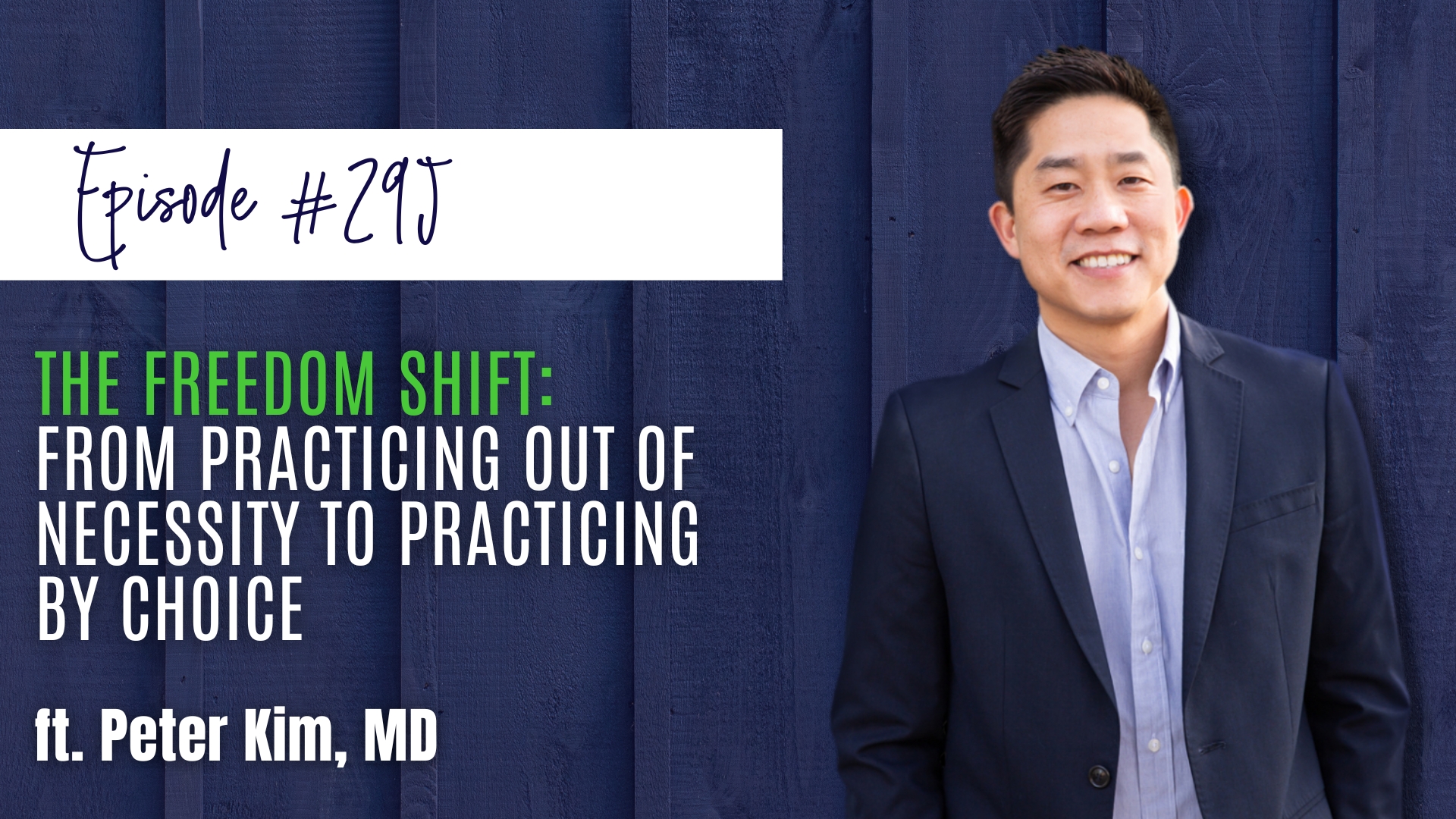
#295 The Freedom Shift: From Practicing Out of Necessity to Practicing by Choice ft. Peter Kim, MD



Episode Highlights
Now, let’s look at what we discussed in this episode:
-
Rethinking When Freedom Actually Begins
-
Obligation, Fear, and the Feeling of Being Trapped
-
The Freedom Shift: From Necessity to Choice
-
Why Choice Makes Better Doctors
-
Gradual Freedom and the Question That Changes Everything
Here’s a breakdown of how this episode unfolds.
Episode Breakdown
Rethinking When Freedom Actually Begins
Peter opens the episode by challenging a deeply ingrained belief among physicians: that freedom comes later. After training, after loans are paid off, after hitting a financial milestone that finally signals safety. He explains that many doctors subconsciously postpone freedom, assuming it’s a reward reserved for the end of a long, exhausting road.
He introduces the idea that the biggest shift doesn’t happen when you quit medicine or retire early. Instead, it happens much earlier, in a quieter, less dramatic way.
This is what he calls the “freedom shift,” a mindset change that alters how you experience work even if your schedule, title, or income hasn’t changed yet.
From the start, Peter frames the episode as a conversation for physicians in the thick of it (between cases, late at night, or during long commutes), letting listeners know this isn’t about escape, but about perspective.
Obligation, Fear, and the Feeling of Being Trapped
Peter shares a personal story about being asked to cover an extra shift.
No crisis, no emergency… just a request. What stood out wasn’t the decision itself, but the internal question he asked: not “Do I want to do this?” but “Do I have a choice?” That moment revealed how often work decisions are driven by perceived necessity rather than intention.
He reflects on how normal this feeling is among physicians. Many say they enjoy medicine but still feel trapped, overcommitted, or unable to step back. Even when no one is forcing them, the pressure of income, expectations, and identity quietly dictates their choices.
This highlights a core tension many doctors feel: wanting more freedom without wanting to quit medicine. Peter points out that these feelings often coexist, even though we’re conditioned to believe they shouldn’t.
The Freedom Shift: From Necessity to Choice
Here, Peter clearly defines the “freedom shift.” It’s the transition from practicing medicine because you have to, to practicing because you choose to. The key change isn’t external, it’s internal. Income stops being the primary driver behind every decision about time and work.
He explains that for many physicians, nothing visibly changes at first. They still see patients, show up to work, and keep similar schedules. But internally, their relationship with medicine changes. Stressors feel lighter, problems don’t carry the same emotional weight, and fear no longer dominates decision-making.
Peter shares patterns he’s observed in conversations with countless physicians. Once fear of scarcity fades, doctors begin making intentional choices instead of reactive ones. This shift alone can fundamentally change how work feels, even before any logistical changes happen.
Why Choice Makes Better Doctors
Peter addresses a common misconception: that Passive Income MD is about getting physicians to quit medicine. He clarifies that the opposite is often true. Many doctors leave because they feel forced, burned out, or boxed into impossible situations.
When physicians are given options and flexibility, many reconnect with why they chose medicine in the first place. Peter observes that doctors who practice by choice often become more engaged, present, and fulfilled. Their quality of care improves, even if they work fewer hours or adjust their schedules slightly.
He contrasts working under pressure (chasing RVUs, bonuses, quotas) with working from a place of autonomy. When doctors no longer feel trapped, they can be more present with patients and more present at home, leaving work at work instead of carrying it everywhere.
Gradual Freedom and the Question That Changes Everything
Peter warns against waiting for a perfect moment of certainty: one more contract, one more year, one more financial milestone. He explains that freedom doesn’t need to be an all-or-nothing leap. Instead, he advocates for gradual freedom, slowly reducing work as alternative income grows.
He describes this as a more sustainable and fulfilling path, where physicians experiment with small changes like dropping a half-day or reducing shifts while staying connected to what they enjoy about medicine. The goal isn’t to stop working, but to stop having to work.
He closes the episode with a powerful question: If you didn’t need to work for money, how would your relationship with medicine change?
Peter encourages listeners not to answer immediately, but to start noticing when fear or pressure drives their decisions. Freedom, he reminds us, doesn’t start when you leave medicine; it starts the moment you realize you have a choice.
YOU KNOW ALL TOO WELL THAT ENTREPRENEURSHIP CAN BE A LONELY BUSINESS.
If you are looking for a private, invitation-only Mastermind designed for physicians and high-performing professionals who will settle for no less than fulfilling their visions of success while helping others do the same — Momentum MD is for you!
Filling our next cohort now, limited spots are available! APPLY now!