
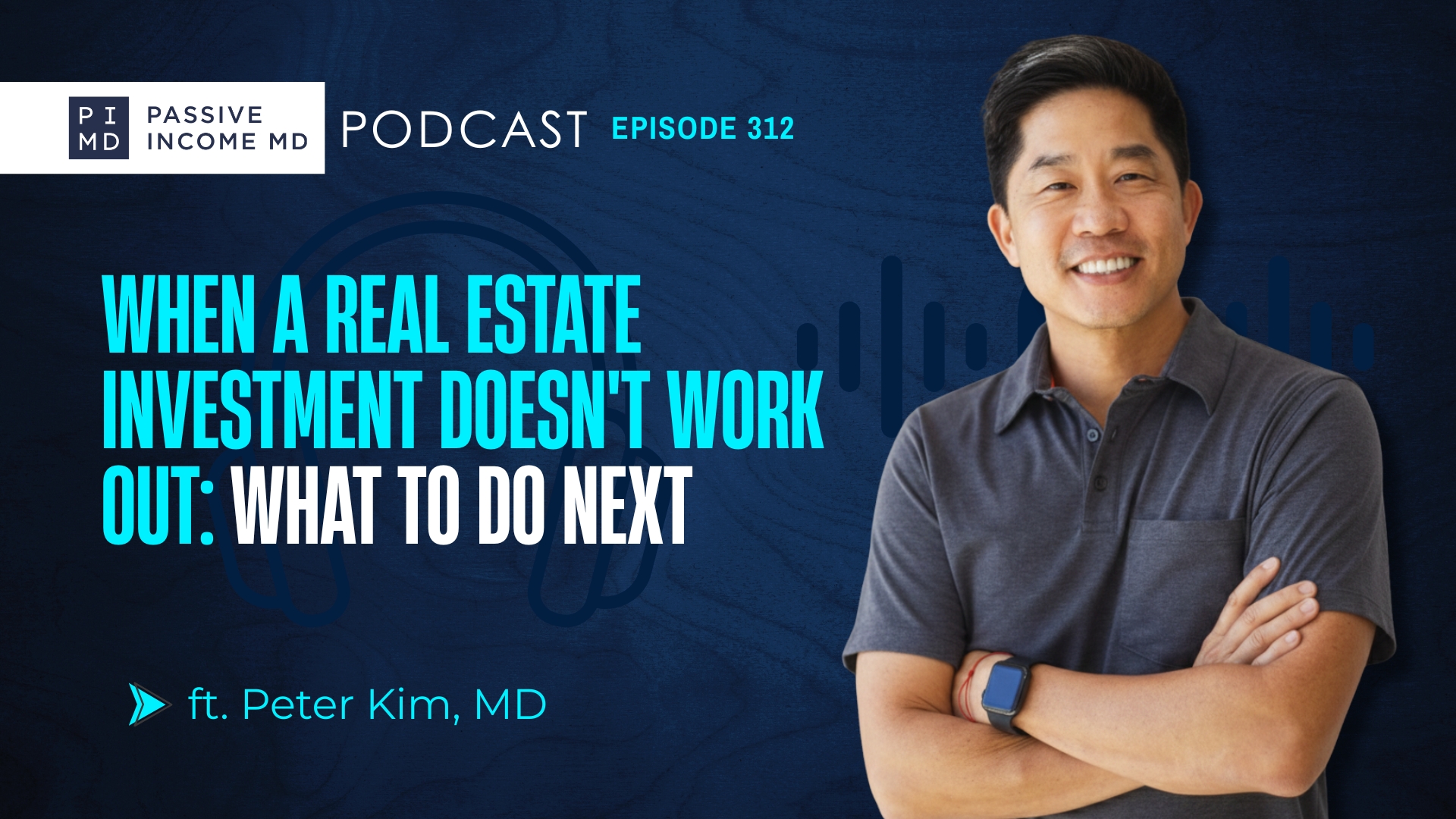
#312 When a Real Estate Investment Doesn’t Work Out: What to Do Next ft. Peter Kim, MD



Episode Highlights
Now, let’s look at what we discussed in this episode:
-
This One’s Different
-
The Emotional Side Comes First
-
Get Your Paperwork Together, Then Call Your CPA
-
Keep Tracking Your K-1s
-
Do the Postmortem
Here’s a breakdown of how this episode unfolds.
Episode Breakdown
This One’s Different
Peter opens by referencing a previous episode he did on losing money in investments (What to Do If You Lose Money on an Investment), but he’s quick to say this isn’t a repeat of that conversation. That earlier episode was more general, more conceptual.
This one is for people who are already sitting in a bad deal right now, not thinking about it hypothetically.
Distributions stopped, a letter from an operator with bad news, a real estate fund that’s underwater. He’s talking to the person who already knows the feeling. No sugarcoating, no motivational opener.
He acknowledges that plenty of people in the community are quietly navigating this right now and not really talking about it. That’s exactly why he felt it needed its own episode.
The Emotional Side Comes First
Before Peter gets into anything practical, he stops to talk about what a deal gone wrong actually feels like. And it’s not just the money. It’s the confidence hit, the second-guessing, the replay of the moment you decided to invest, and the hard conversations you had to have at home about it.
Peter doesn’t just speak from the outside looking in. He’s been an investor in deals that didn’t perform, and he’s also been on the operator side running deals that didn’t go the way projections suggested they would. He says both experiences carry real weight, and he’s not going to pretend otherwise.
He then continues by asking a practical question that reframes everything: what category is your deal actually in? Is it struggling but still alive, or is the equity completely gone? That answer changes the tax picture and the timeline for every decision that follows. If you don’t know the answer yet, that’s the first conversation you need to have with your operator.
Get Your Paperwork Together, Then Call Your CPA
Peter gets into the actual steps here. First one: get your documentation in order. Subscription agreement, PPM, every K-1 from every year you were in the deal, investor updates, all of it. He admits it’s easy to put this off when you’re frustrated, but he pushes back on that instinct directly.
Then comes what he calls the most important practical step he can offer: talk to your CPA now, not at tax time. He’s clear that he’s not a tax professional and what he’s sharing is a framework for that conversation, not advice for anyone’s specific situation. But he does walk through why the timing matters.
The core concept he explains is suspended passive losses. When you invest passively in real estate, you’re collecting paper losses on K-1s every year, mostly from depreciation. If you don’t have passive income to offset them, they just sit there, attached to that investment, accumulating year after year. But when a deal is completely and finally disposed of, all of those losses are released at once. In the year of total loss, they can offset not just passive income but ordinary income too, including W-2 income. For a physician who’s been in a deal for four or five years, that number can be significant.
Keep Tracking Your K-1s
Even on a deal that has stopped performing, your K-1s may still be showing paper losses from depreciation each year. Those losses are still accumulating and can potentially offset gains from other investments that are doing well.
Peter says this surprises a lot of investors. When a deal goes quiet or stops distributing, most people just stop looking at the paperwork. It’s understandable, he says, but your CPA still needs those numbers. Letting them go untracked is a mistake that costs you later.
His main point: don’t look away from the paperwork because the deal is painful to think about. That’s when it matters most to keep paying attention.
Do the Postmortem
Reinvention Without Leaving Medicine YOU KNOW ALL TOO WELL THAT ENTREPRENEURSHIP CAN BE A LONELY BUSINESS.
If you are looking for a private, invitation-only Mastermind designed for physicians and high-performing professionals who will settle for no less than fulfilling their visions of success while helping others do the same — Momentum MD is for you!
Filling our next cohort now, limited spots are available! APPLY now!