
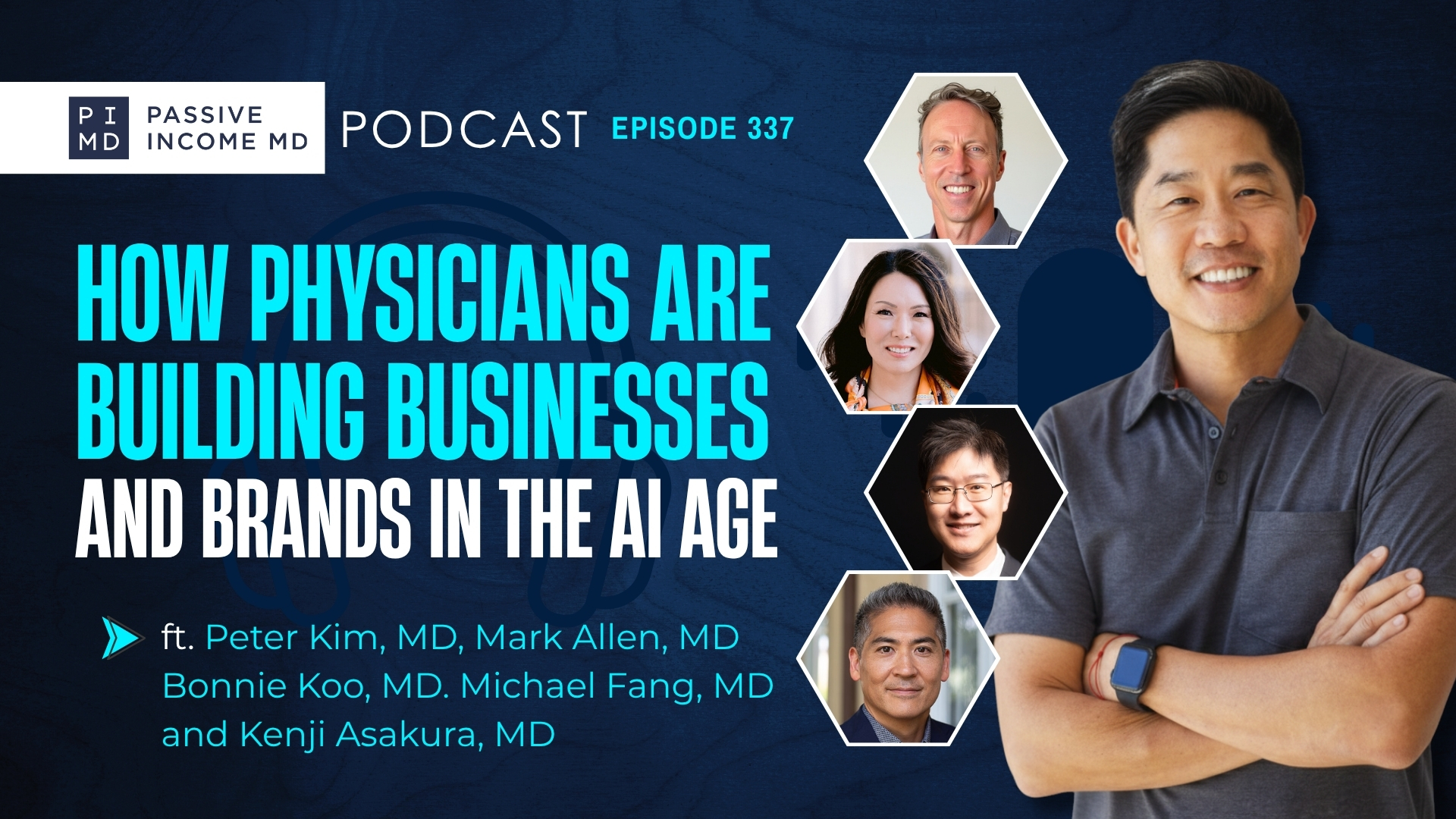
#337 How Physicians Are Building Businesses and Brands in the AI Age ft. Dr. Peter Kim, Dr. Mark Allen, Dr. Bonnie Koo, Dr. Michael Fang, and Dr. Kenji Asakura



Episode Highlights
Now, let’s look at what we discussed in this episode:
- Meet the Panel and Their First Steps
- Getting Past the Fear of Leaving the Path
- Personal Branding and Learning AI
- Real Estate, Valuation, and Building Real Wealth
- Why Community and Networking Matter
Here’s a breakdown of how this episode unfolds.
Episode Breakdown
Meet the Panel and Their First Steps
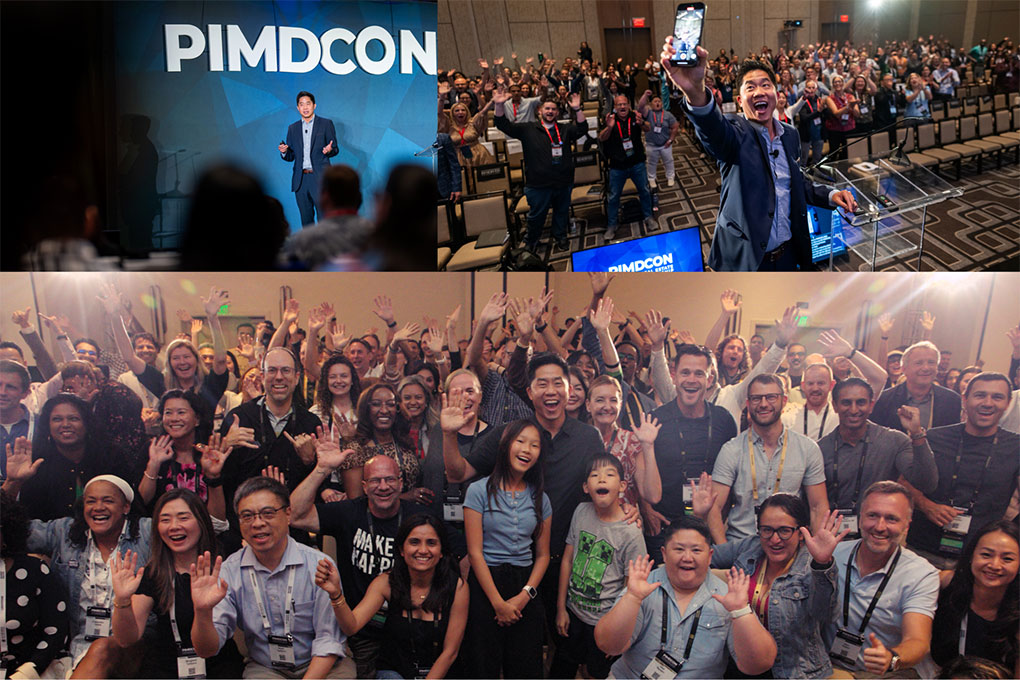
Peter sets this episode up as a panel during Encore Nights. The topics are taking the first steps outside clinical medicine, handling uncertainty and risk, building personal brands and AI skills, investing in business, and the power of community.
He then introduces the four panelists: Dr. Mark Allen, founder and CEO of HeroForge AI, Dr. Bonnie Koo, a dermatologist and founder of Wealthy Mom MD, Dr. Michael Fang, who leads strategy at Northwestern’s Institute of AI in Medicine and runs Rise Health, and Dr. Kenji Asakura, a real estate investor with over 150 rentals and several thousand syndicated units.
Peter points out that people often see the big businesses these guests built and wonder what it actually took to start. So he asks each of them what their first real step outside clinical medicine was.
Michael says it wasn’t as mind blowing as people think. He incorporated an LLC and signed up for a tech conference full of software vendors, even though he knew no tech or coding at the time.
Mark started in AI research during residency, 26 to 28 years ago, and after successful clinical trials people offered to fund a company. His residency director called it a one way door, so he put together seed financing while still a resident, then left.
Bonnie says she can’t point to one specific step. For her it was putting herself in rooms with other people trying something different, because it normalized the idea, and she also started a blog. Her LLC came years later, once the business was making money.
Kenji says he simply went with whatever caught his interest, and he never saw it as risk, he saw it as an adventure. The shared message is that there’s no single right first step.
Getting Past the Fear of Leaving the Path
Peter asks how they got past the uncertainty, since most physicians expect to follow one straight path. Kenji admits he held onto certainty for a long time. He always had a W-2 job while building something on the side, and he suggests starting while you’re working, building a simple version of your idea, and seeing if anyone wants to buy it before you take the leap. More recently, he says, he’s become willing to burn the boats and take bigger risks.
Michael makes the point that one of the privileges of being a physician is financial certainty. You can cut back your hours significantly and still earn an income most Americans would envy, so he sees no problem with holding onto clinical work while you explore. He notes that most of the panel stayed physicians for years, with Mark being the exception who moved early. Bonnie says she was just having fun and wasn’t thinking about quitting medicine. She worked four days a week as a dermatologist, and she stopped practicing when COVID hit, not because of her business.
Mark explains where his drive came from. His dad had a family craft brewery in Northern California and insisted he try the family business before medical school, so he became its first head of sales and marketing and saw revenue quadruple that year. He also says he thinks a lot about impact. As a doctor you help people one at a time, but a product or service can help far more people, even long after you’re gone.
Personal Branding and Learning AI
Peter turns to Bonnie, whose talk at the conference focused on building a personal brand. She says she believes everyone needs one, whatever their profession, partly because of what she calls a trust recession, with fake AI profiles and actors making people want to know the real person. She’s clear that a personal brand is not the same as being an influencer. Her definition is that it’s your professional reputation at scale, and she compares it to compound interest, since it creates opportunities like speaking, introductions, and conversations you can’t predict yet. The one downside she mentions is that you’ll get some trolls.
Peter then asks Mark what the minimum is that every physician should understand about AI over the next 12 months. Mark starts with the very basics of how to talk to AI and ask it good questions, which he says can double what you get out of every hour you put in. After that come reusable building blocks like skills and AI employees, and then the ability to build real custom software even with zero technical background. He expects the top performers in every field to be doing this within a year.
Mark adds that most people don’t even know how to talk to AI yet, so there’s a big advantage available right now. He flags that using the best tools in HIPAA compliant environments is a real challenge for physicians, though there are ways around it. He compares learning AI to learning a foreign language, hard and awkward at first, then suddenly something you can’t imagine living without.
Real Estate, Valuation, and Building Real Wealth
Peter asks Kenji what’s realistic for physicians who want more control over their lives through real estate. Kenji says it doesn’t have to take a lot of time as long as you’re buying properties that produce significant income. He explains that real estate income is essentially tax free, so $100,000 in cash flow is roughly equal to a $150,000 W-2 salary, and he doesn’t think generating that is very hard if you know what you’re doing. He also describes real estate as a hybrid between an investment and a business, since you can create value and increase a property’s worth by multiple six figures, then use a 1031 exchange or similar move to turn that equity into income, which gives you freedom.
Michael jokes that his only real estate experience was a Section 8 property he bought as a first year med student, which did not go well. He says most people use AI like a basic search engine, and compares it to his parents using an iPhone only as a phone. He recommends spending two hours a week upskilling on AI, just like physicians once set aside time to read new articles, and says now is a great time to combine real estate and AI, for example by using it to build better spreadsheets and financial projections.
Michael also shares a lesson from his own journey, that income and valuation are two different things. He uses SpaceX as an example of negative income but massive valuation, and says that in software, value can come from users, data, being first to solve a problem, or time saved for clinicians. He wishes he’d focused on valuation earlier instead of only on income. Kenji adds a caution from Peter’s teaching, that entrepreneurs should keep pulling money out of the business and investing it across multiple asset classes, because putting your entire net worth into one business is risky if it fails.
Why Community and Networking Matter
Reinvention Without Leaving Medicine YOU KNOW ALL TOO WELL THAT ENTREPRENEURSHIP CAN BE A LONELY BUSINESS.
If you are looking for a private, invitation-only Mastermind designed for physicians and high-performing professionals who will settle for no less than fulfilling their visions of success while helping others do the same — Momentum MD is for you!
Filling our next cohort now, limited spots are available! APPLY now!