
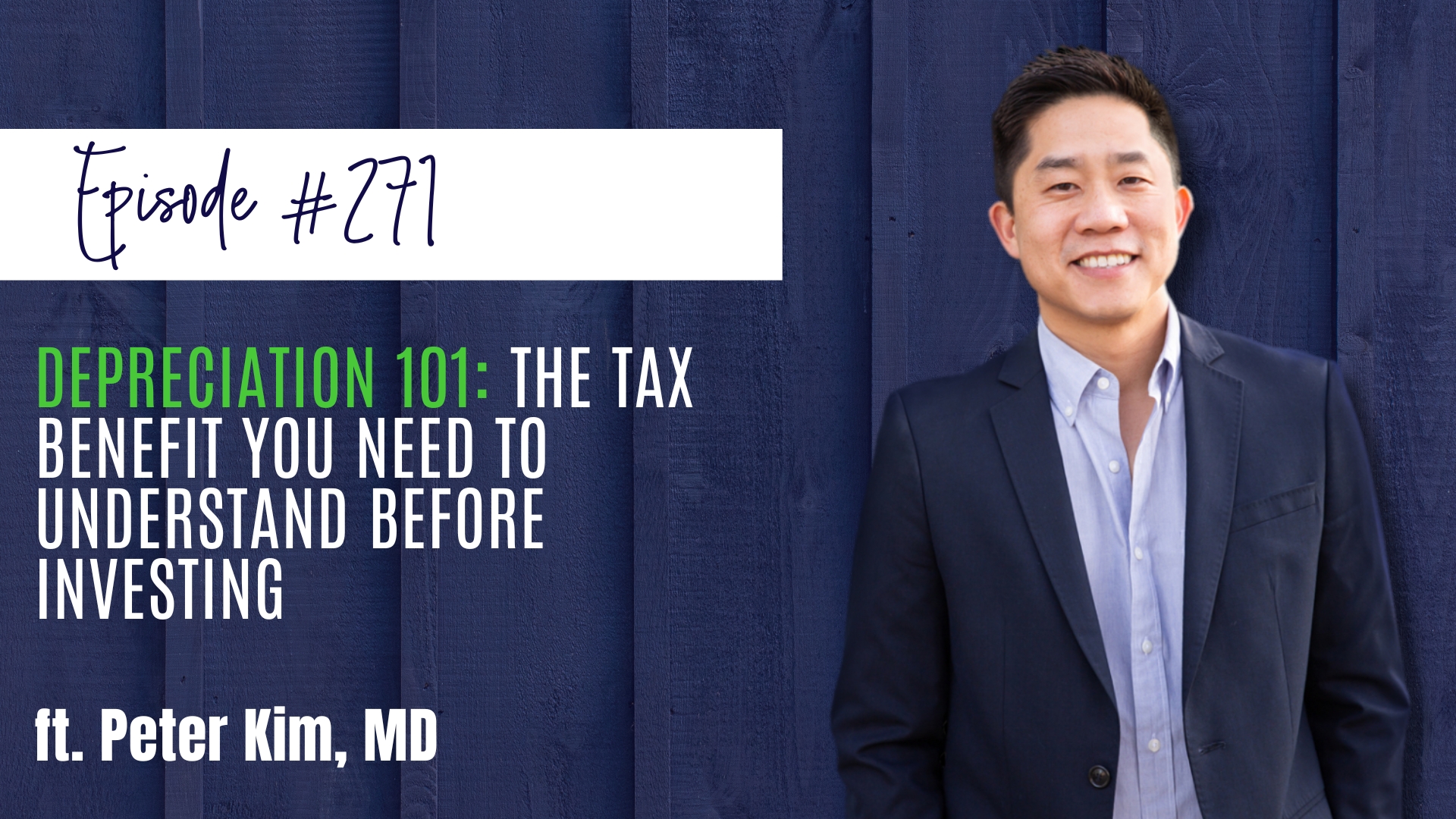
#271 Depreciation 101: The Tax Benefit You Need to Understand Before Investing ft. Peter Kim, MD


Episode Highlights
Now, let’s look at what we discussed in this episode:
-
Why Depreciation Is a Big Deal for Investors
-
How Depreciation Offsets Income (Even W2 or 1099)
-
Use Cost Segregation and Bonus Depreciation to Maximize Deductions
-
What Happens When You Sell? Watch Out for Recapture
-
Avoid These Common Mistakes and Plan Ahead
Here’s a breakdown of how this episode unfolds.
Episode Breakdown
Why Depreciation Is a Big Deal for Investors
Peter kicks off the episode with a real-life story: he sold one of his properties and had to think deeply about taxes. That led him to today’s focus, depreciation.
He explains it simply: even though buildings gain value in real life, the IRS lets you write off part of your property’s value each year because it’s technically “wearing down.” This deduction doesn’t cost you anything extra and can lower the taxes you owe on passive income. For example, if $400,000 of your property is depreciable, you might deduct about $14,500 annually, just for owning it.
That paper loss can reduce the taxes you pay on rental income or distributions from syndications. And it’s just the beginning. Peter transitions into how physicians, especially those earning strong clinical income, can benefit even more from this strategy.
How Depreciation Offsets Income (Even W2 or 1099)
Here, Peter connects the dots for high-earning physicians. If you’re bringing in clinical income and also investing passively, depreciation can help reduce your taxable income from those investments. Even better, in some cases, like qualifying as a real estate professional or using the short-term rental loophole, you might even offset your clinical income.
He gives a quick heads-up that he’s covered those exceptions in other episodes, then smoothly leads into a deeper discussion on how to take full advantage of depreciation using two powerful tools.
Use Cost Segregation and Bonus Depreciation to Maximize Deductions
Next, Peter explains how to boost your tax savings using cost segregation and bonus depreciation. Cost segregation breaks a property into parts (like appliances and fixtures), allowing you to depreciate them faster. Then, bonus depreciation lets you take a huge chunk of those deductions in year one instead of spreading them over decades.
He notes that bonus depreciation is phasing out but might return soon, depending on legislation. These strategies let investors take big deductions early, freeing up cash and making real estate even more tax-efficient. But as Peter points out, these benefits come with a catch once it’s time to sell.
What Happens When You Sell? Watch Out for Recapture
Peter introduces the concept of depreciation recapture, where the IRS reclaims some of the tax savings when you sell. Up to 25% of the depreciation you claimed could be taxed—unless you use smart strategies to avoid it. Options include a 1031 exchange (rolling gains into a new property), investing in Opportunity Zones, or passing the property to heirs for a step-up in basis.
He brings this to life with a story about a physician who used bonus depreciation to offset $200,000 in clinical income, then later used a 1031 exchange to buy a larger property, avoiding a big tax hit and starting fresh with a new depreciation schedule.
Also, Peter shares a free downloadable resource called “Depreciation Demystified”—a quick guide designed to help physicians better understand concepts like bonus depreciation, cost segregation, and what to expect when selling a property. Download here!
Avoid These Common Mistakes and Plan Ahead
To close, Peter shares common pitfalls: forgetting to depreciate (some CPAs miss it), failing to plan for recapture, or assuming all losses reduce active income. He emphasizes the importance of understanding passive vs. active losses and finding a CPA who knows physician tax planning.
He ends with encouragement: depreciation isn’t a loophole—it’s an incentive meant to reward those who invest in housing. If you’re serious about real estate, learning this can save you tens of thousands in taxes and speed up your path to financial freedom.
YOU KNOW ALL TOO WELL THAT ENTREPRENEURSHIP CAN BE A LONELY BUSINESS.
If you are looking for a private, invitation-only Mastermind designed for physicians and high-performing professionals who will settle for no less than fulfilling their visions of success while helping others do the same — Momentum MD is for you!
Filling our next cohort now, limited spots are available! APPLY now!